Accounting · AIFor you
Month-end answers before anyone asks the question.
EEva reads your general ledger, flags the variances that matter, explains why they moved and links every answer to the entries behind it.
Financial analysis for accounting
ACCOUNTING & FINANCE
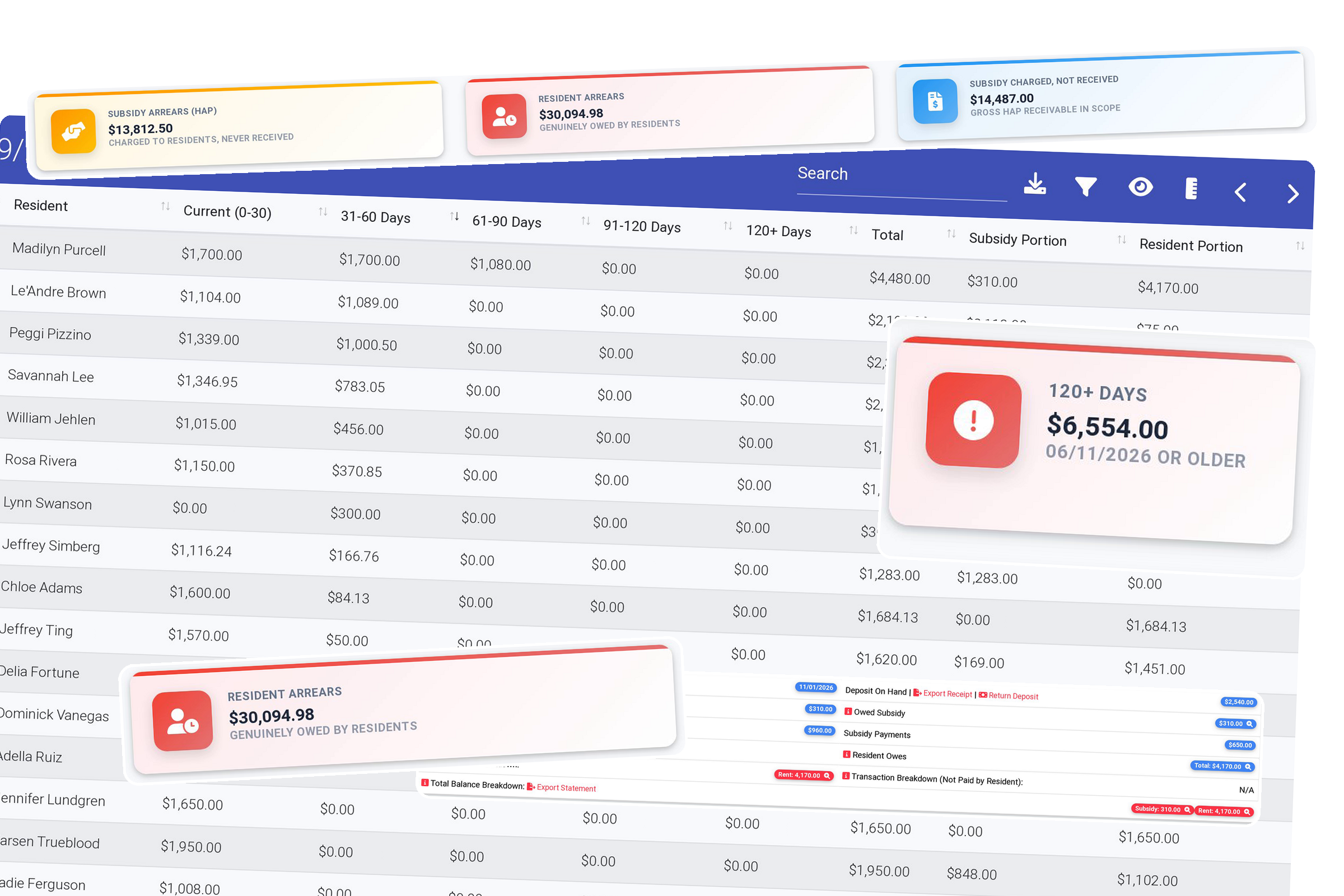
Every charge, payment and vendor invoice posts once to one double-entry ledger, and staff pull delinquency aging in a median 36 seconds.
If accounting has to re-enter what property management already knows, the systems are not connected.
A resident charge posts once, to the resident ledger, the journal and every statement, instead of being copied into a second accounting system.
Nobody re-keys it, and accounting traces every number back to the unit and household that produced it.
At NuRock, posting a property's subsidy payments takes three minutes instead of an hour, because site and accounting work one record.
When a resident pays, the site team sees the payment and accounting sees the balanced journal entry on the same record, all in ExactEstate Core. Different views, never different books.
Every entry balances or it doesn't post, so the books can't drift. The chart of accounts sits with the properties it reports on.
Approved vendor invoices move straight to payment and a journal entry. AP and AR aging show who owes what, and for how long.
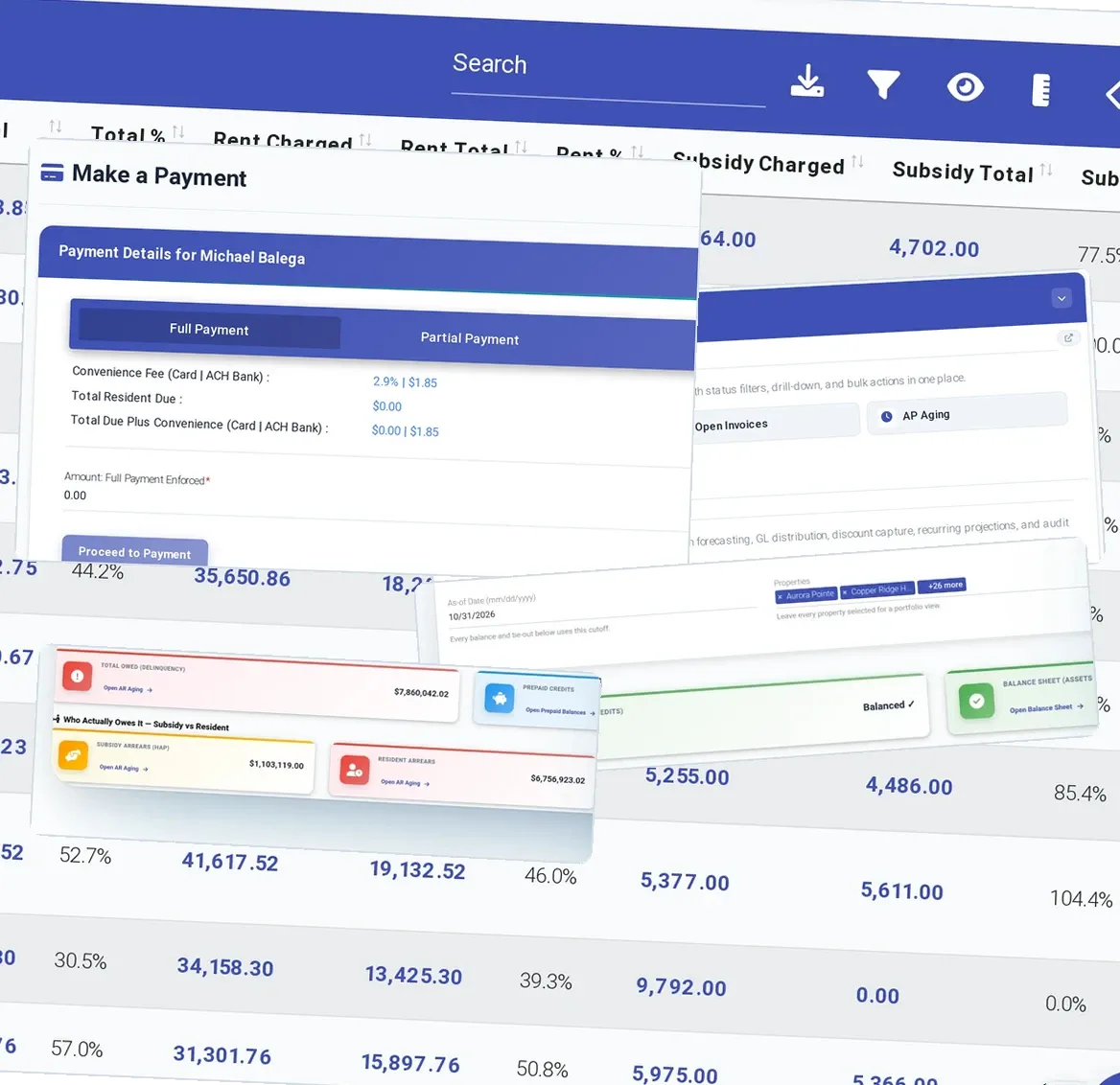
Residents pay online or on autopay through Payabli, with Stripe also supported. Each payment lands on the resident ledger and the general ledger together.
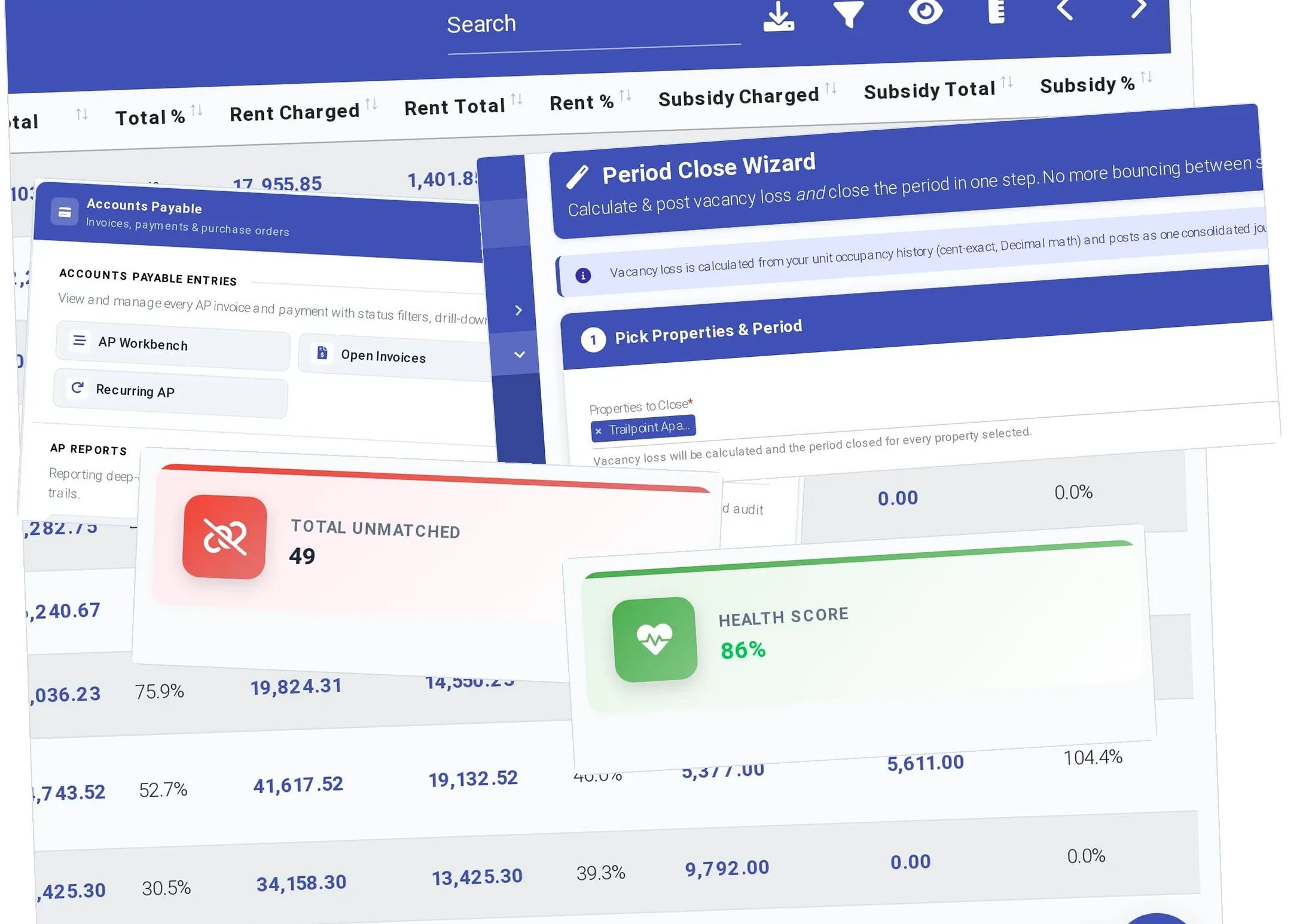
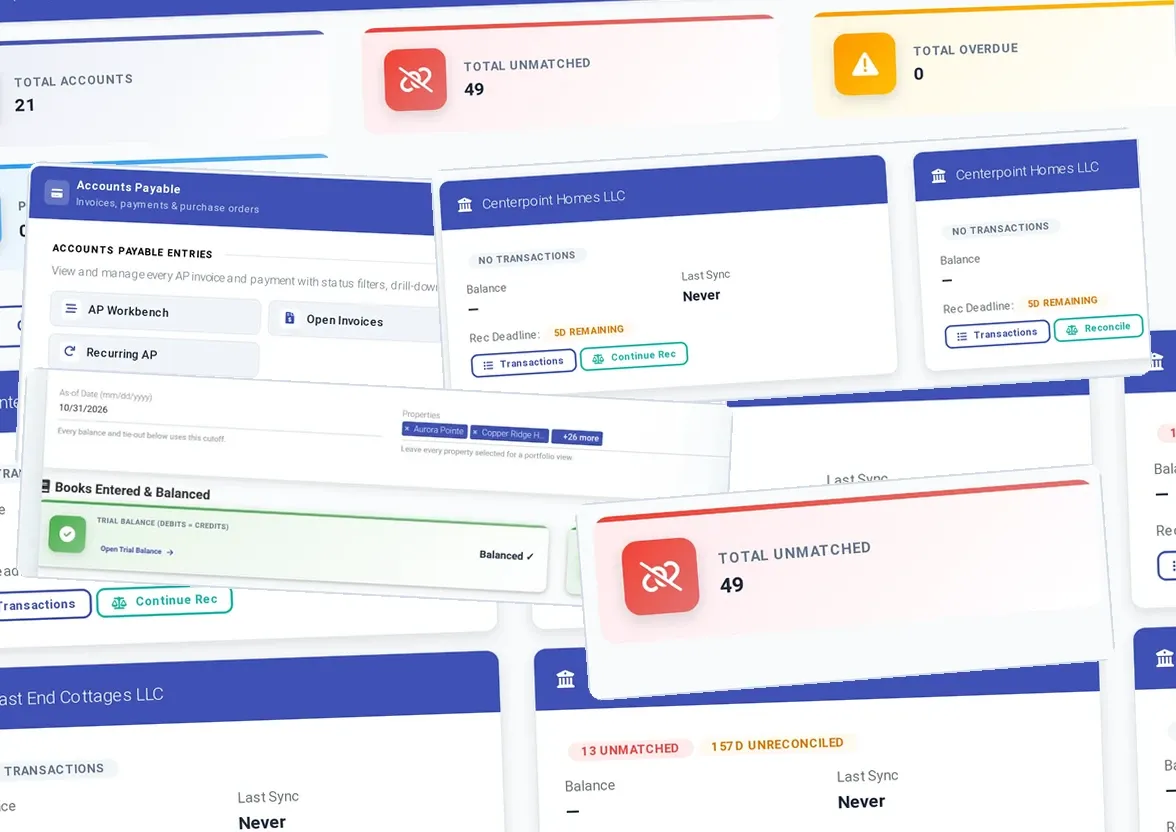
Plaid bank feeds match bank activity against what is already posted. Your team works only the exceptions.
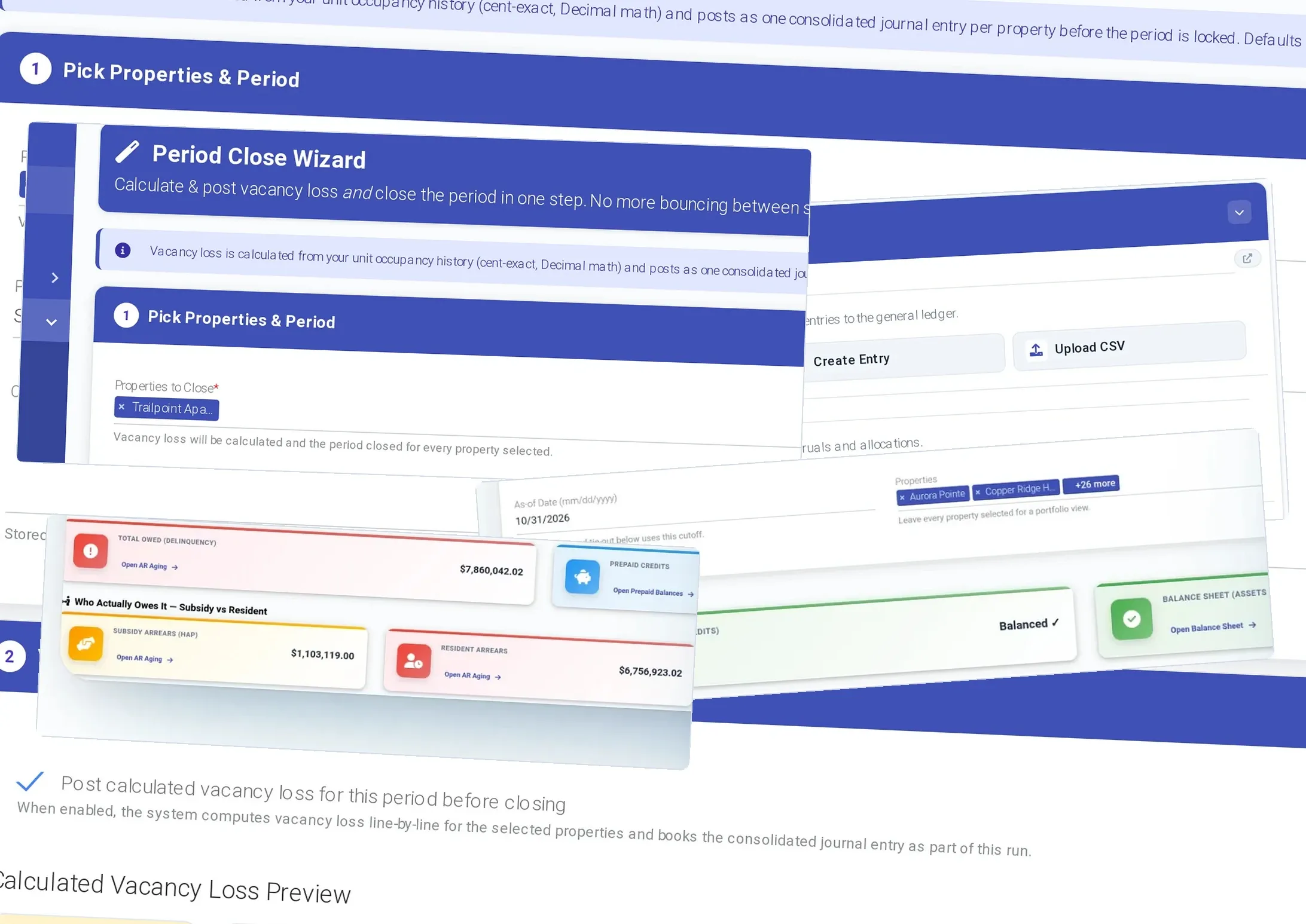
Trial balance, balance sheet, income statement and T-12 come straight off the live ledger. Nobody rebuilds them in a spreadsheet at month-end.
Owners who keep books elsewhere get QuickBooks Online batch exports and MIP GL exports. A token-authenticated API with OpenAPI docs covers every other connection.
Cash and accrual come from the same property events, so each audience gets its basis without anyone keeping a second set of books.
Reporting basis is a setting on the report, not a second copy of the data, so switching it changes the statement and never the records.
EEva reads each vendor invoice, codes it to property, vendor and GL account and routes it for approval, so nobody keys AP by hand.
Once approved it is paid and posted as a journal entry on one path, and AP aging shows what is still open.
ExactEstate matches Plaid bank feeds against posted entries, so reconciliation starts with only the mismatches, not a full statement to tick off.
Splits and partial matches stay with a person, and every match is kept as history the auditor can read.
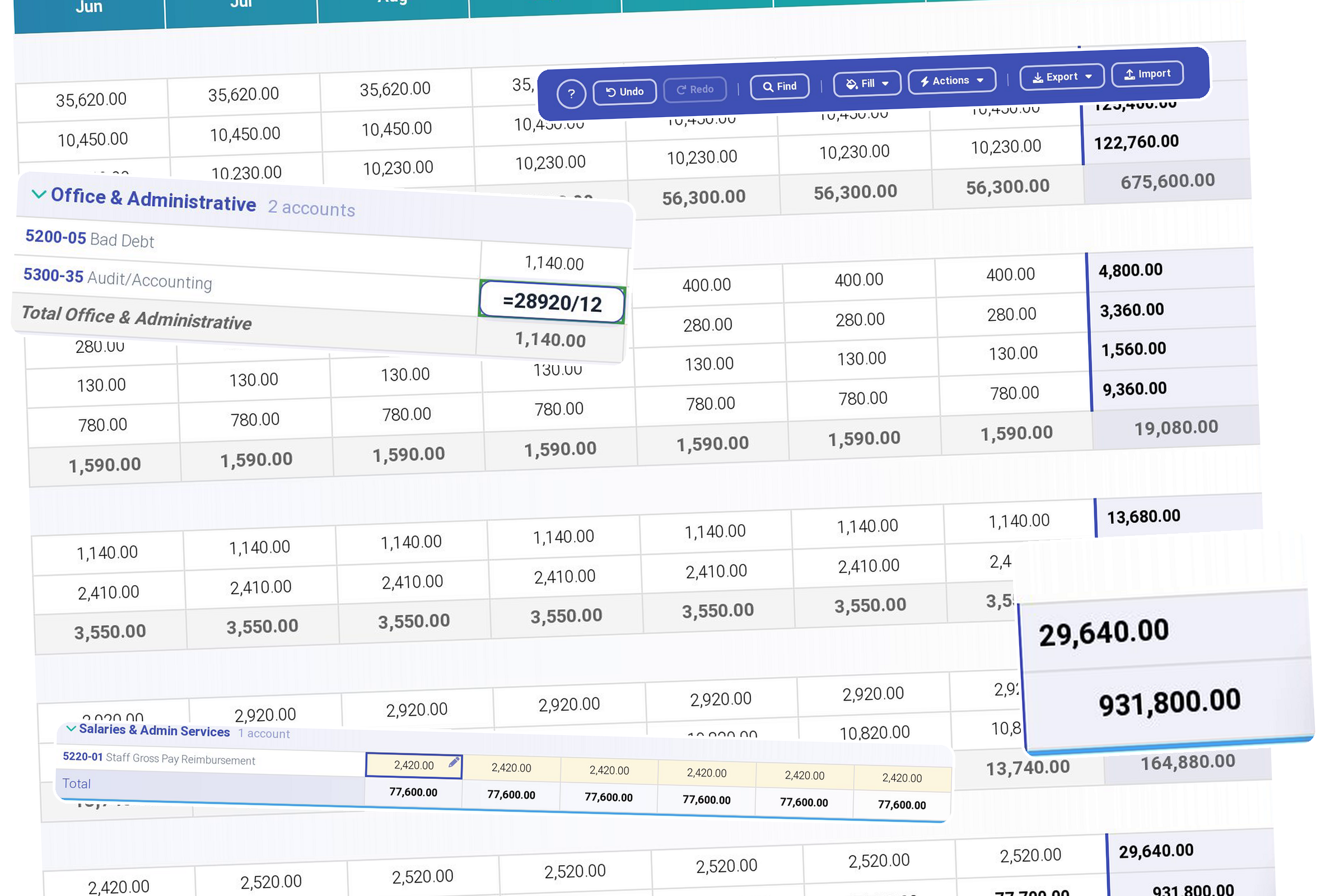
Statements, T-12 and budget-versus-actual come off a ledger your team posts to all month, not one rebuilt from site exports at month-end.
Close confirms the numbers instead of rebuilding them in a spreadsheet.
Yes. ExactEstate keeps a double-entry general ledger and enforces balanced journal entries, with AP, AR, bank reconciliation, trial balance, balance sheet, income statement, T-12 and AP/AR aging built in.
Yes. ExactEstate sends batch exports to QuickBooks Online and produces a MIP GL export, so an owner or parent company that keeps its books elsewhere still receives them. A token-authenticated API with OpenAPI docs covers other connections.
Through the resident portal, as a one-time payment or autopay, processed by Payabli (Stripe is also supported). The payment posts to the resident ledger and the general ledger as one transaction.
Yes. Affordable, multifamily and HOA properties run on the same platform and the same accounting at the Core price. Affordable programs add Affordable Housing for compliance.
Accounting is part of ExactEstate Core: $3 per unit per month. See pricing.
ExactExtractor starts from the reports your current system already produces: upload, group, map, validate, then review what will be loaded before go-live. See how migration works.