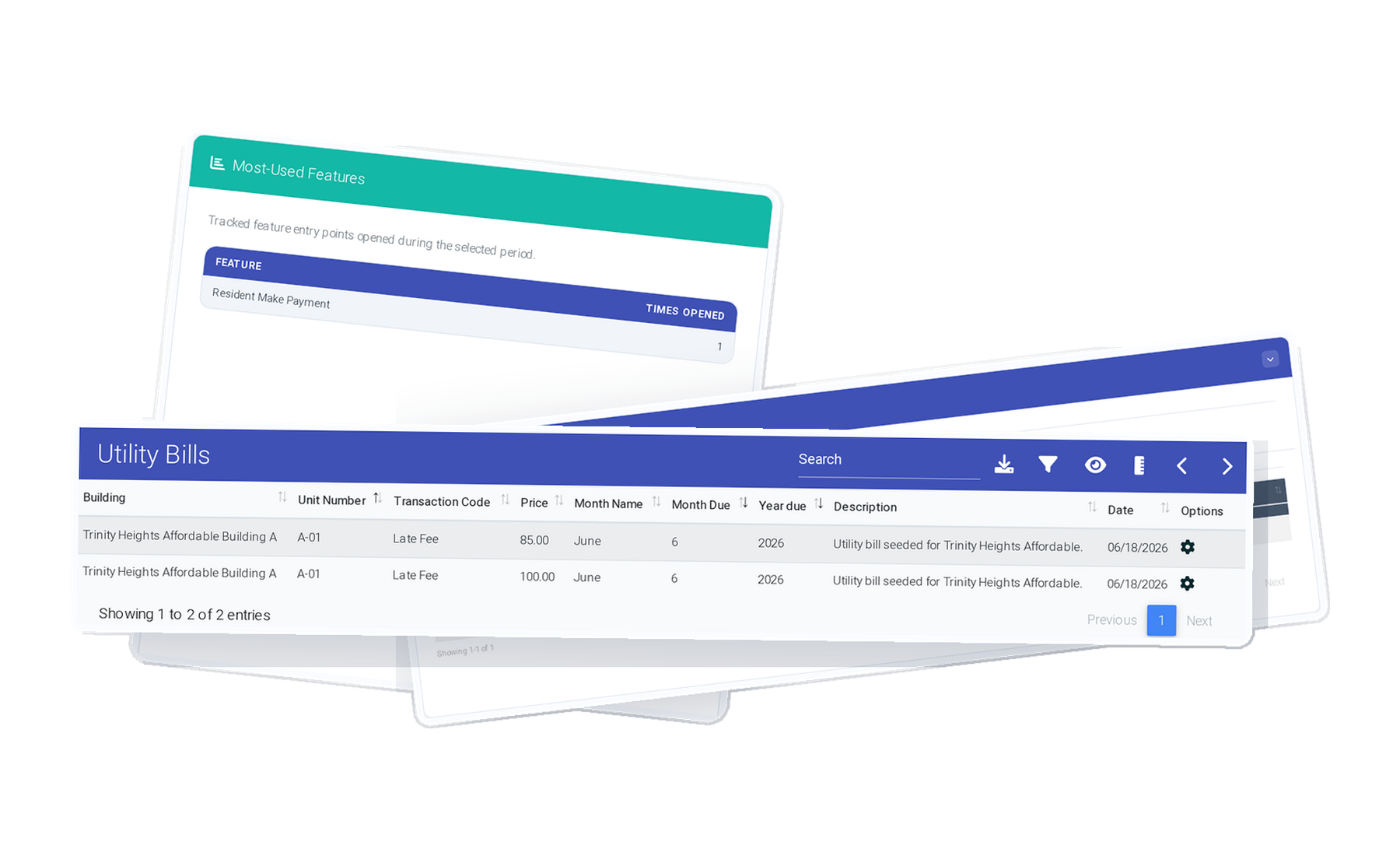
RESIDENT EXPERIENCE
One household record should survive the entire resident journey.
Applications, verification, leasing, payments, communication, maintenance, recertification and move-out should keep moving around the same household and unit context instead of becoming a new record as they pass between departments.
A handoff is a chance to lose context. Remove the handoffs.
Apply without rebuilding the property rules.
An application form is where a property’s rules become a question someone has to answer. Get it wrong and the eligibility work starts over at verification.
Applications are built to the property’s actual requirements — the documents it needs, the verification it runs, the waitlist it maintains — and applicants complete them in a portal rather than on paper a leasing agent then re-enters.
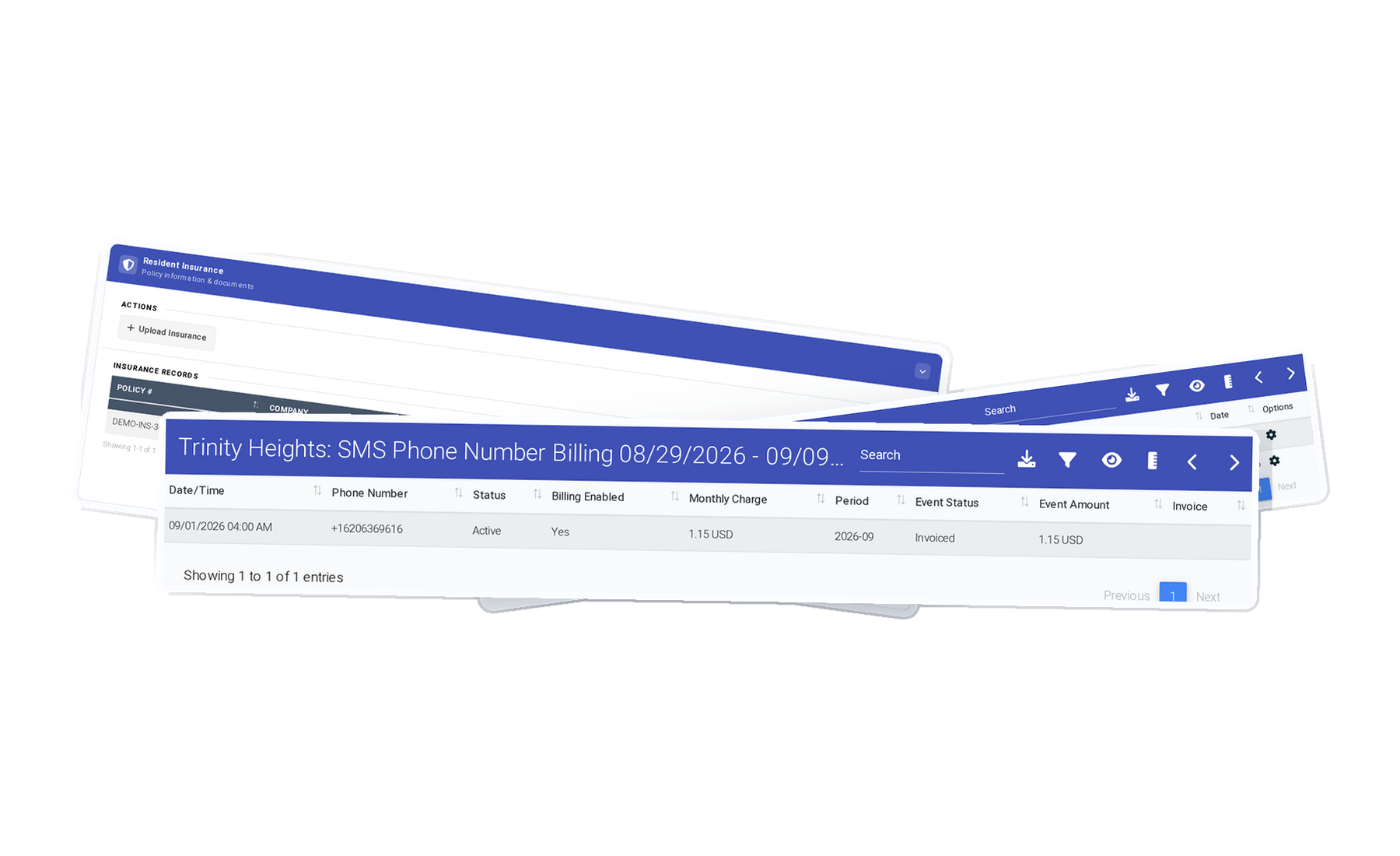
Move from application to occupancy.
Prospect, application, verification, waitlist and compliance review, prelease, signature, resident. On most systems those are seven places a record can stall with nobody quite responsible for it.
Here each is a stage of the same household record, with the stage it is in, what it is waiting on, and who has it. Moving forward does not mean re-creating the household somewhere new.
A portal for the person doing the task.
A resident paying rent, an owner reading a statement, a vendor closing a work order and a case worker checking a household are doing unrelated jobs. One screen serving all four serves none of them well.
One system does not have to mean one interface. Each portal shows the task that person came to do, against the same underlying record.
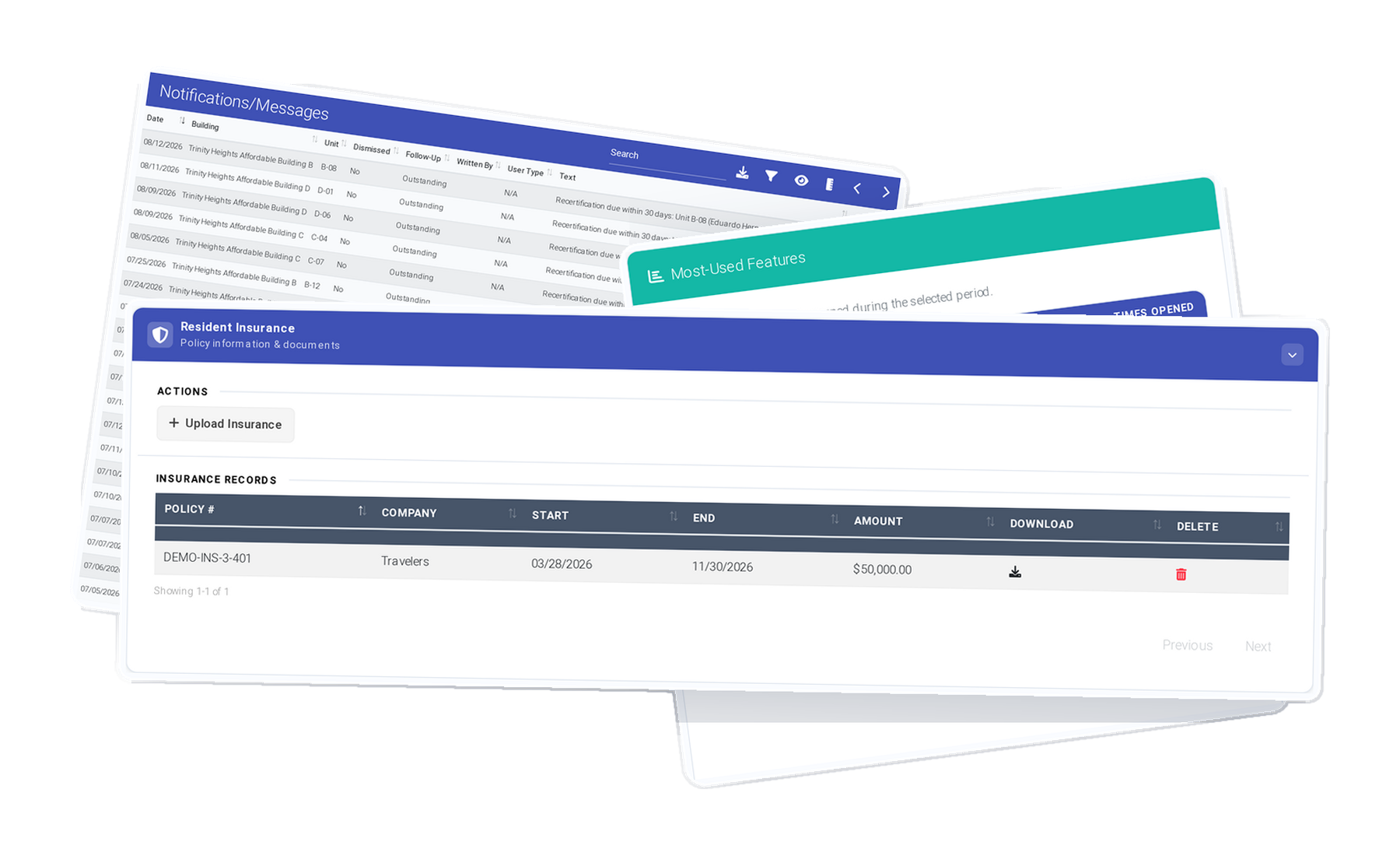
Messages belong to the record.
Email and SMS with an applicant or resident run in both directions and stay attached to the household record, within the channel and contact rules the property has configured.
The point is not the channel. It is that the next person to open the file can see what was actually said.
Maintenance is part of resident experience.
Residents do not judge maintenance on the ticketing system. They judge it on whether anyone came, and whether anyone told them.
A request becomes a work order, gets assigned to staff or a vendor, collects updates the resident can see, and closes on verification — as one thread on the household and the unit, not as a ticket living in its own application.
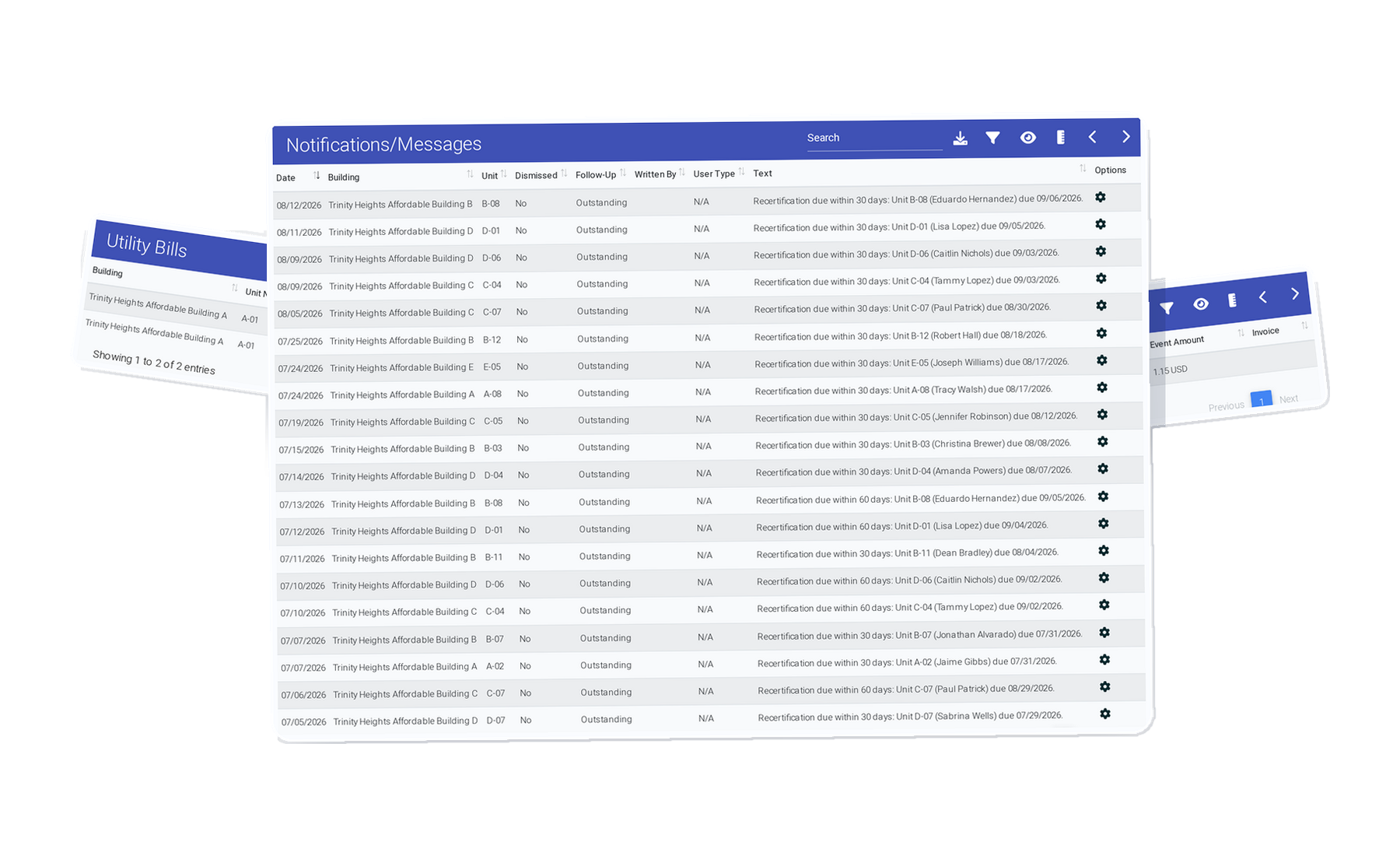
Close the lifecycle financially.
Move-out is where a resident record usually goes quiet and a receivable quietly survives it.
The inspection, the final account statement, deposit and damage handling, and the accounting entries that follow are the closing steps of the same record — so the household is closed on the operational side and on the books at the same time.
Retention starts before a renewal offer.
By the time a notice to vacate arrives, the decision is months old. The signals were in the record: the maintenance history, the payment pattern, the message that never got answered.
ExactEstate surfaces renewal and move-out risk as a ranked signal with the operational evidence behind it, early enough to be worth a phone call.
The call is what retains the resident. Software can tell a team where to spend it.